
Email Automation Is Not About Writing More Emails. It Is About Designing the Customer's Next Step.
The real automation problem is not how many emails to write. It is how to turn customer behavior into a visible, executable, and reviewable next step.
Owning a customer relationship is only the beginning. The operating challenge is deciding what should happen after a subscriber, shopper, or buyer gives the store a signal.
Teams often begin with copy: the welcome subject line, the abandoned-cart discount, or the number of post-purchase messages. Those choices matter, but they should follow a more important decision: who is this customer now, what just happened, and what should happen next?
Our view is that email automation is a customer next-step decision system. Copy is one node. The system connects state, signal, goal, eligibility, timing, branches, message, and review.
Turn A Copy Question Into A Path Question
- Customer state: subscriber, cart abandoner, checkout abandoner, first-time buyer, repeat buyer, or inactive customer.
- Behavior signal: browse, cart, checkout, purchase, click, review, return, or disengagement.
- Business goal: first purchase, completed checkout, education, review, replenishment, repeat purchase, or reactivation.
Two shoppers can abandon the same cart because of shipping, sizing, payment, timing, returns, or trust. Treating every hesitation as a discount problem is easy automation, but weak decision design.
A Flow Contains Seven Decisions
- Customer state: who is this person now?
- Behavior signal: what did they just do?
- Entry condition: why should they enter?
- Wait time: when is the right moment?
- Branch logic: who continues and who is excluded?
- Message and CTA: what single action should move forward?
- Performance review: how will the team know the step happened?
Shopify and established email platforms expose triggers, filters, waits, multiple paths, and analytics because automation is not simply a saved message sequence. The path is the operating model.
Four Real FosterFlow Workflow Actions
These four FosterFlow visuals match the published WeChat article: three are public-safe demonstrations redrawn from real product workflows, and one is the user-approved original Flow Canvas screenshot. They demonstrate workflow structure, not customer performance. Store identity, customer records, orders, revenue, dates, and private URLs are not shown.
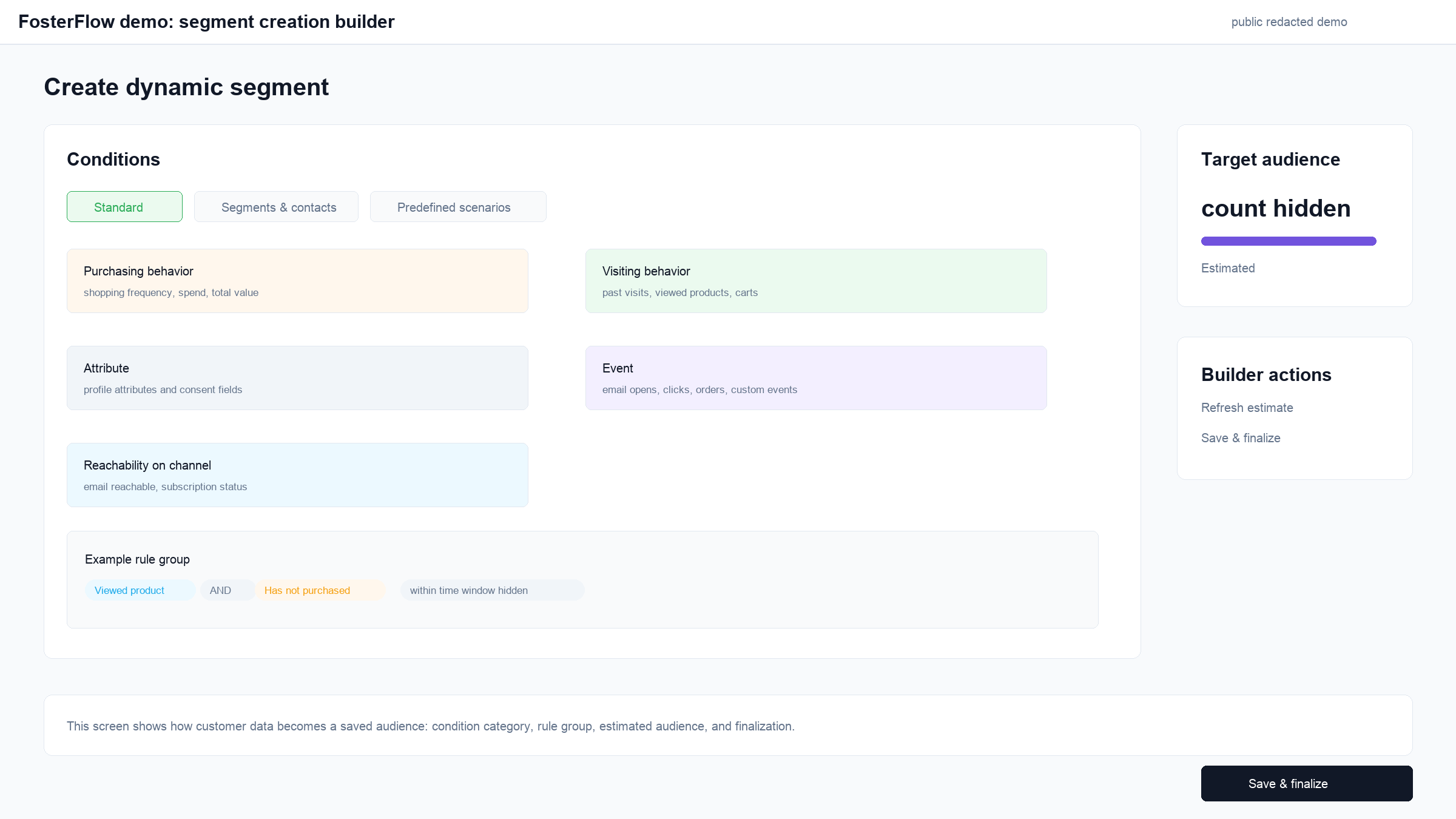
Audience logic belongs at the beginning. Browse-only visitors, first-time buyers, high-value inactive customers, and checkout abandoners should not receive the same treatment.
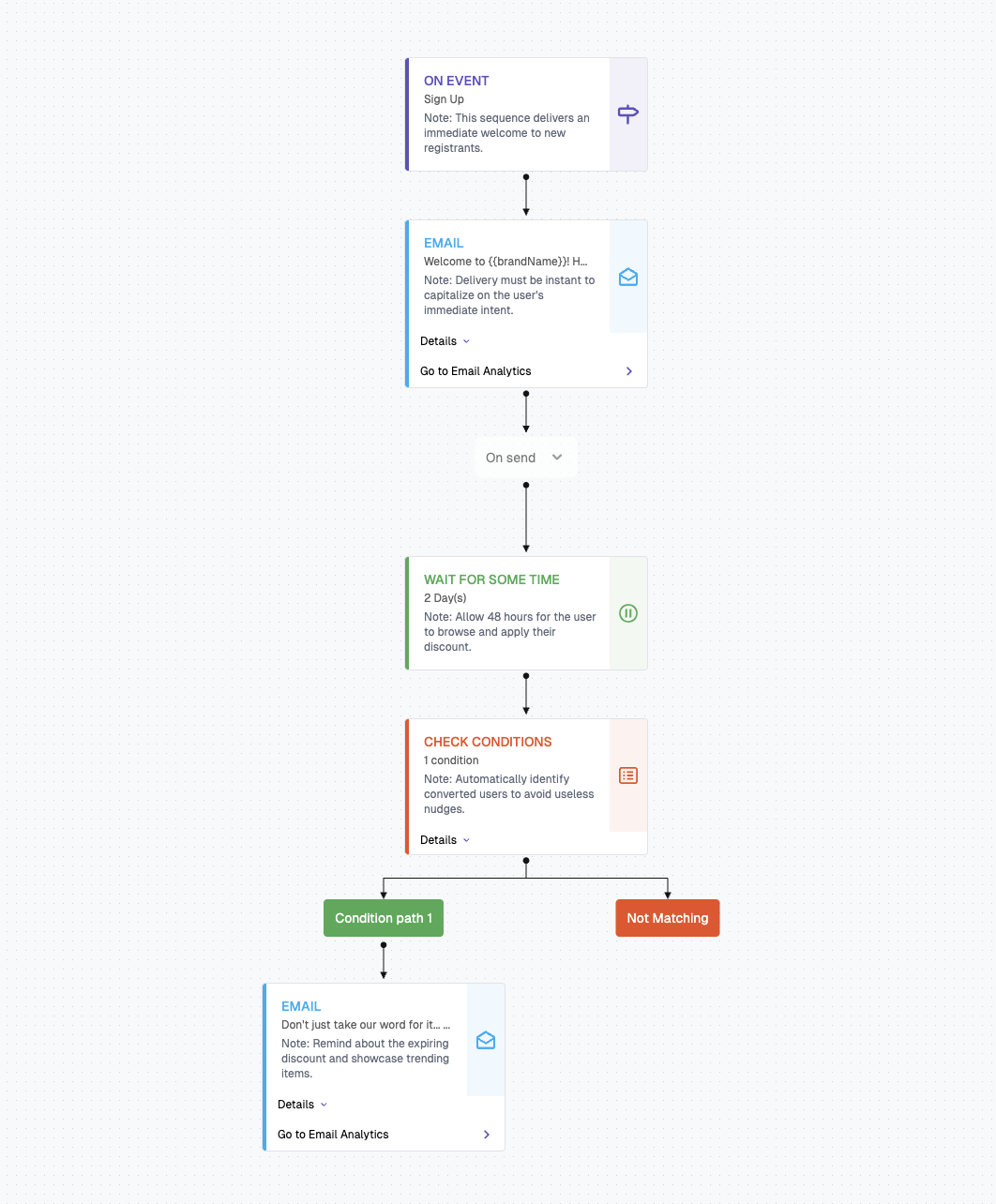
Visible logic gives a lean team leverage. A marketer can inspect timing, a founder can question an exclusion, and a new teammate can understand why the next message exists.
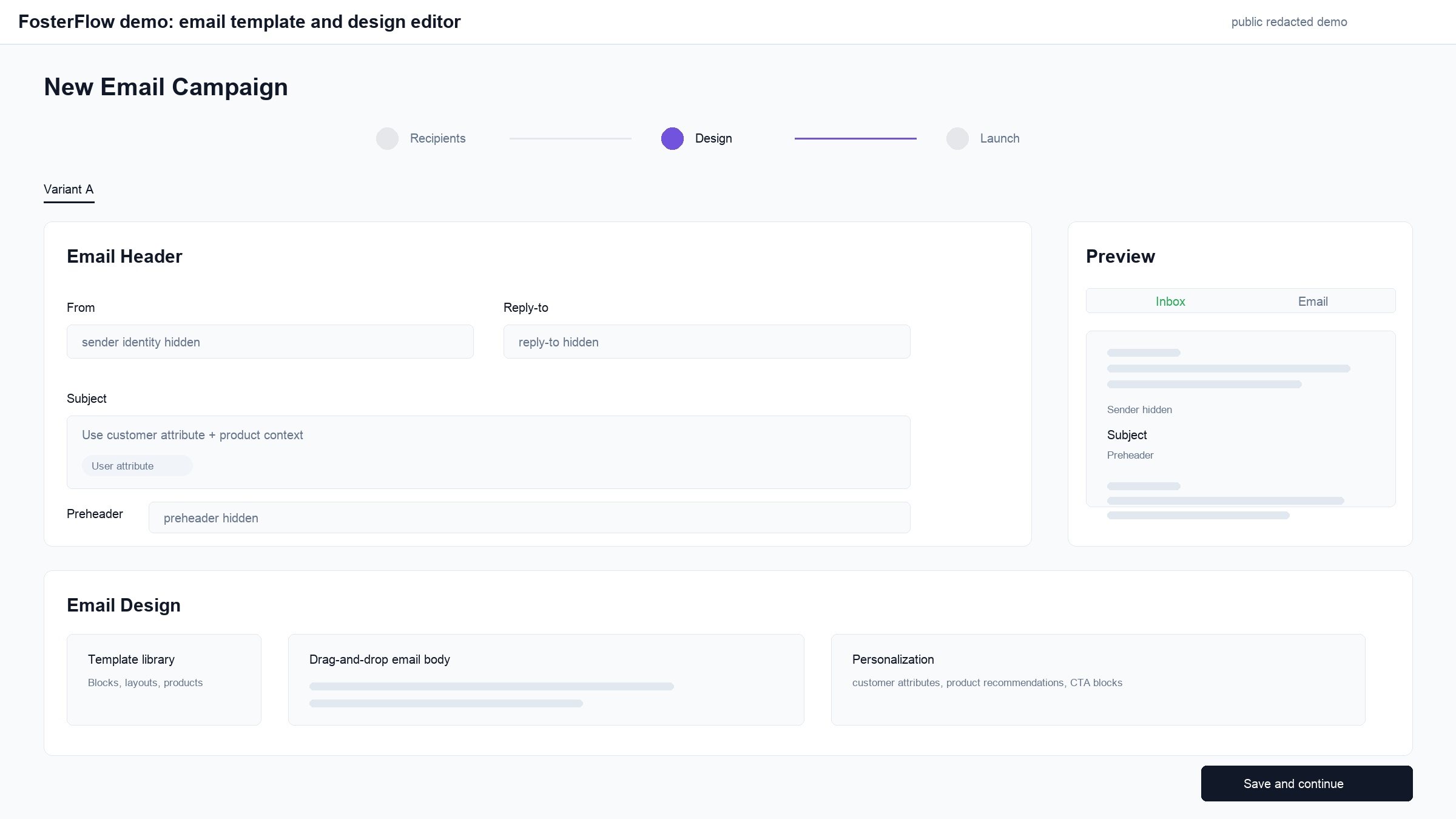
A message should solve one problem at one moment. Welcome builds trust, abandonment reduces friction, post-purchase extends the relationship, and replenishment respects the natural buying cycle.
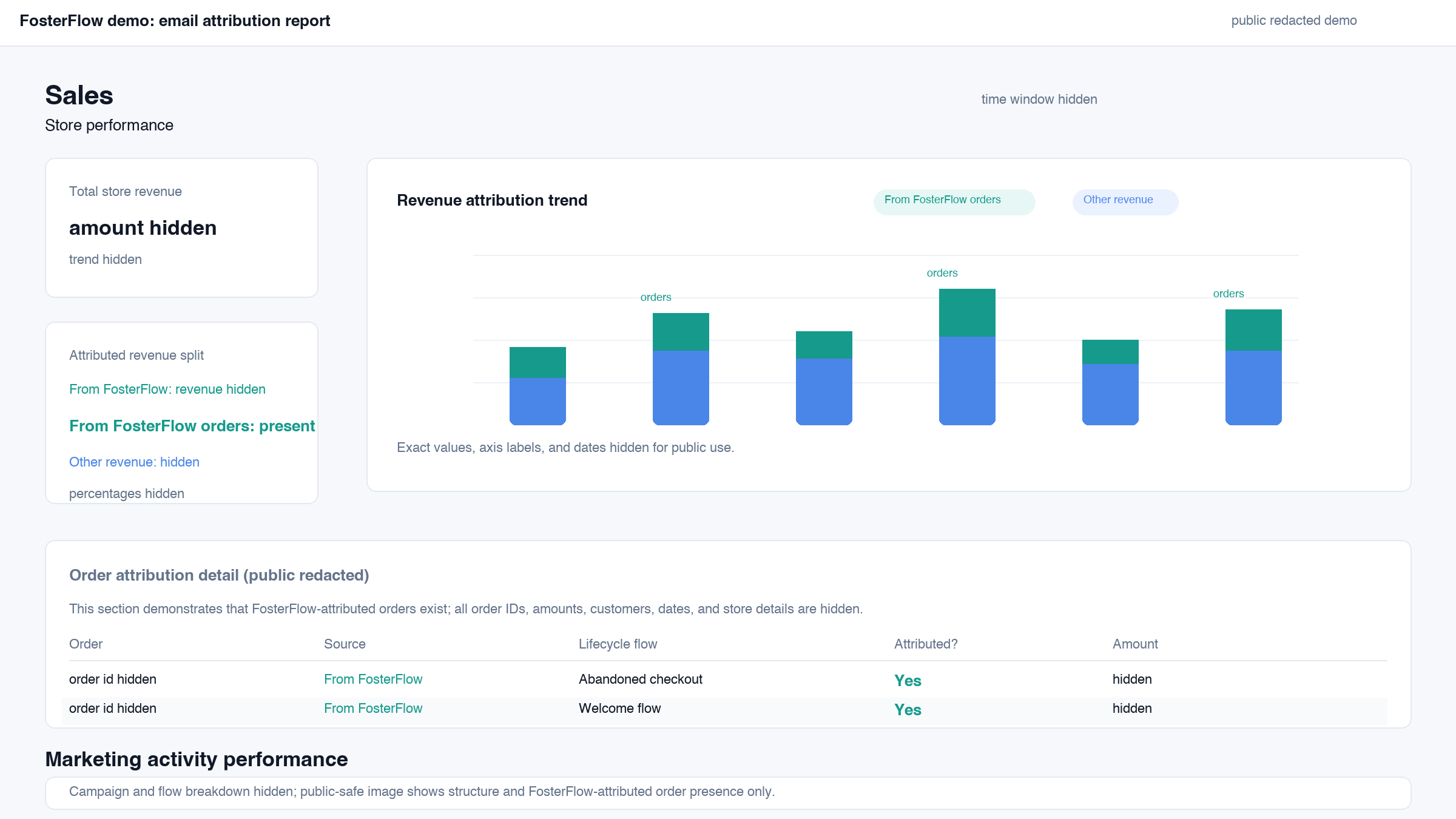
Review The Path, Not Only The Open Rate
- Deliverability and reachability: can the path safely reach customers?
- Open rate: do subject, sender, timing, and state broadly match?
- Click and CTA behavior: did customers move toward the intended action?
- Orders, conversion, and attributed revenue: do business outcomes exist without overstating credit?
- Unsubscribes and complaints: is the path creating an unacceptable relationship cost?
A useful review asks whether the right customers entered, whether the message fit their state, whether the next action happened, and whether the result damaged list health or trust.
A Lean-Team Starting Framework
- Choose one lifecycle moment.
- Define customer state and entry eligibility.
- Name the likely friction.
- Choose one next action.
- Set waits, exclusions, and branch rules.
- Write the message and select outcome and relationship-cost metrics.
Where AI Fits In The Growth Operating System
AI adds little when segments, triggers, branches, and review definitions are unclear. Once the path is explicit, AI can support audience checks, content variants, workflow diagnosis, test ideas, and performance interpretation.
DataFlowForever treats email as one layer of an AI Growth Operating System: acquisition creates signals, commerce records transactions, lifecycle automation continues the relationship, and attribution feeds the next decision.